Everything about the Foreign Earned Revenue Exemption: Optimizing Your Standard Deduction Advantages
The Foreign Earned Earnings Exemption (FEIE) presents a beneficial opportunity for united state citizens living abroad to decrease their tax obligation responsibilities. Comprehending the qualification criteria is important for those looking for to profit from this exclusion. Additionally, asserting the common reduction can boost general tax obligation benefits. Handling this procedure involves mindful interest to information and a recognition of usual risks. Checking out these facets can give clarity and maximize potential tax obligation benefits.
Understanding the Foreign Earned Earnings Exclusion (FEIE)
The International Earned Revenue Exclusion (FEIE) permits united state people and resident aliens functioning abroad to omit a part of their international earnings from federal earnings tax. This provision works as an economic alleviation device, enabling expatriates to maintain a bigger share of their revenue earned in foreign nations. By reducing taxable revenue, the FEIE aids relieve the worry of dual tax, as individuals might also be subject to tax obligations in their host countries. The exclusion applies only to earned earnings, which consists of salaries, salaries, and specialist fees, while passive revenue and investment gains do not certify. To gain from the FEIE, people have to file certain types with the IRS, detailing their international earnings and residency - FEIE Standard Deduction. Comprehending the subtleties of the FEIE can substantially influence financial preparation for U.S. citizens living overseas, making it crucial for expatriates to remain informed regarding this helpful tax stipulation
Eligibility Requirements for the FEIE
To get approved for the Foreign Earned Earnings Exemption (FEIE), individuals should meet certain qualification requirements. This consists of enjoyable residency requirements, passing the physical visibility examination, and establishing a tax obligation home in a foreign nation. Each of these factors plays a vital function in figuring out whether one can take advantage of the exclusion.
Residency Needs
Satisfying the residency requirements is necessary for people looking for to get the Foreign Earned Earnings Exemption (FEIE) To be qualified, taxpayers need to establish an authentic residence in an international nation or nations for a continuous period that generally spans an entire tax year. This requirement stresses the need of a deeper connection to the foreign area, moving past plain physical visibility. Individuals need to demonstrate their intent to reside in the international country and have actually established their living situation there. Aspects such as the length of remain, kind of real estate, and regional community involvement are considered in determining residency. Meeting these standards is essential, as failing to do so might invalidate one from taking advantage of the FEIE.
Physical Visibility Examination
Developing qualification for the Foreign Earned Earnings Exclusion (FEIE) can additionally be achieved via the Physical Existence Examination, which requires individuals to be literally existing in a foreign country for at the very least 330 complete days during a successive 12-month period. This test is useful for those that may not satisfy the residency demand yet still stay abroad. The 330 days need to be complete days, implying that any kind of day invested in the USA does not count toward this total. It is crucial for people to keep precise records of their travel dates and places to sustain their claims. Efficiently passing this examination can significantly minimize taxable revenue and improve economic outcomes for expatriates.
Tax Obligation Home Place
Tax home area plays an essential function in establishing eligibility for the Foreign Earned Revenue Exemption (FEIE) To certify, a specific have to develop a tax obligation home in a foreign country, which indicates their main area of organization is outside the USA. This stands out from a mere residence; the individual should conduct their job in the international country while preserving a considerable link to it. The IRS needs that the taxpayer can show the intent to continue to be in the international place for a prolonged period. In addition, keeping a home in the united state can complicate qualification, as it may recommend that the person's real tax obligation home is still in the USA. Recognizing this requirement is crucial for making the most of FEIE benefits.
How to Claim the FEIE on Your Income Tax Return
Asserting the Foreign Earned Income Exclusion (FEIE) on an income tax return calls for cautious focus to information and adherence to certain internal revenue service standards. Taxpayers have to first validate eligibility by satisfying either the authentic residence examination or the physical visibility examination. Once eligibility is verified, they need to complete IRS Kind 2555, which information international gained income and appropriate information regarding their tax home.
It is vital to report all foreign income properly and maintain suitable documents to sustain insurance claims. Taxpayers need to likewise understand the maximum exemption limit, which is subject to yearly changes by the IRS. Filing Type 2555 along with the yearly tax return allows taxpayers to exclude a portion of their international earnings from united state taxation. It is a good idea to speak with a tax expert or Internal revenue service resources for updated details and support on the FEIE process, ensuring conformity and maximization of potential advantages.

The Standard Deduction: What You Required to Know
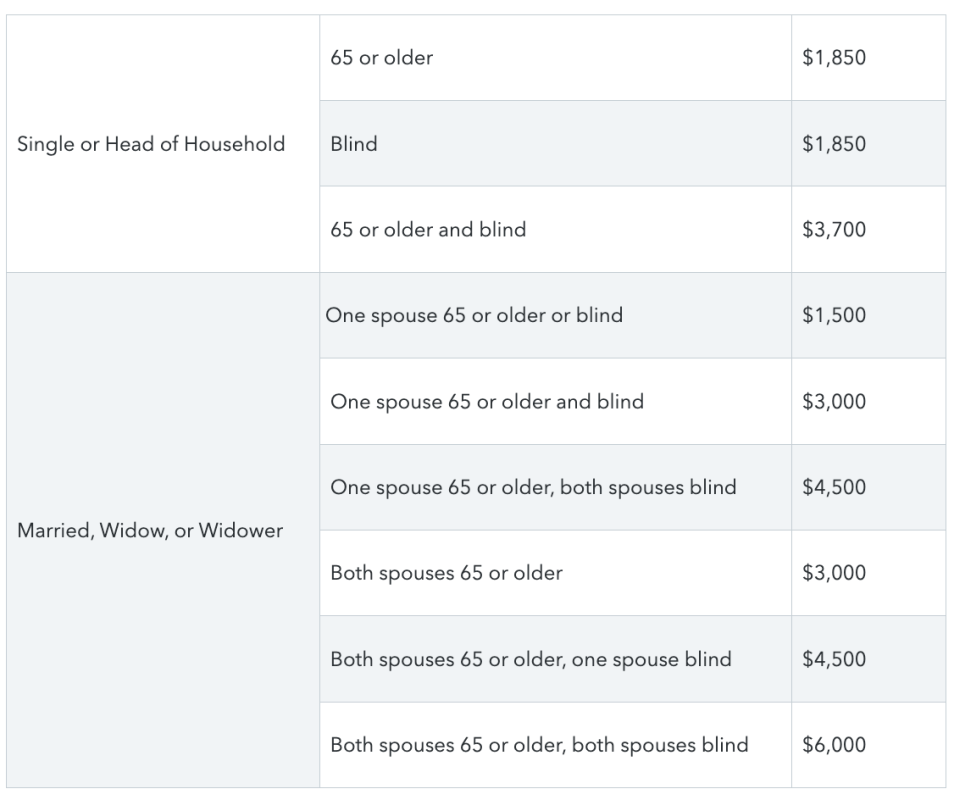
How does the typical reduction impact taxpayers' overall monetary scenario? The standard deduction works as a substantial tax obligation advantage, lowering gross income and possibly lowering tax obligation obligations. For the tax year 2023, the basic deduction is established at $13,850 for single filers and $27,700 for couples filing jointly. This reduction simplifies the filing process, as taxpayers can go with it rather of itemizing deductions, which requires in-depth record-keeping.

Taxpayers making foreign earnings may still claim the common reduction, gaining from reduced gross income even while utilizing the Foreign Earned Income Exclusion (FEIE) Nevertheless, it is necessary to keep in mind that the standard deduction can not be combined with itemized reductions for the very same tax year. Subsequently, recognizing the basic deduction allows taxpayers to make educated choices regarding their tax strategies, maximizing readily available advantages while making certain conformity with IRS policies
Techniques for Maximizing Your Deductions
Making the most of deductions under the Foreign Earned Revenue Exclusion calls for a clear understanding of earned earnings limitations and the advantages of declaring real estate exemptions. Additionally, utilizing Kind 2555 efficiently can boost the capacity for substantial tax obligation cost savings. These techniques can considerably affect the overall tax liability for migrants.
Understand Earned Revenue Limits
While numerous expatriates look for to reduce their tax obligation burden, comprehending the gained earnings limits is essential for effectively leveraging the Foreign Earned Earnings Exclusion. The Irs (IRS) sets particular thresholds that determine the optimum quantity of international gained revenue eligible for exclusion. For the tax year 2023, this limit is $120,000 per qualified individual. Surpassing this limit might cause taxes on the revenue above the limitation, decreasing the benefits of the exclusion. To maximize reductions, expatriates must maintain accurate records of their foreign made earnings and examine their eligibility for the exclusion every year. Strategic preparing around these limitations can substantially improve tax cost savings, enabling click this site expatriates to optimize their economic scenario while living abroad.
Declaring Housing Exclusion Benefits
Several migrants forget the possible advantages of claiming the Housing Exemption, which can substantially minimize their gross income. This exemption permits individuals living abroad to deduct particular housing expenses from their gross revenue, making it simpler to fulfill monetary responsibilities without incurring considerable tax obligation responsibilities. To optimize this advantage, expatriates should validate they certify based on their house and work scenarios. Additionally, understanding qualified costs-- such as rent, utilities, and upkeep-- can enhance the overall reduction. Keeping comprehensive look these up documents of these prices is essential for confirming insurance claims. By strategically navigating via the Real estate Exclusion, expatriates can significantly decrease their tax worry and maintain even more of their profits while living overseas, inevitably enhancing their economic wellness.
Utilize Type 2555 Properly
Using Kind 2555 efficiently can significantly boost the financial advantages offered to migrants, specifically after making use of the Real estate Exclusion. This kind enables people to declare the Foreign Earned Revenue Exemption, which can substantially decrease gross income. To maximize reductions, migrants ought to verify they fulfill the qualifications, consisting of the physical existence examination or the authentic house examination. It is vital to precisely report all foreign gained revenue and to keep thorough records of eligibility. Furthermore, making use of the Housing Exclusion in tandem with Form 2555 can better lower total tax obligation obligation. By understanding the complexities of these forms, expatriates can enhance their tax obligation situation and retain more of their hard-earned income while living abroad.
Common Challenges to Stay Clear Of When Filing Your Tax Obligations Abroad
Frequently Asked Concerns
Can I Declare Both FEIE and the Foreign Tax Obligation Credit Report?
Yes, a person can declare both the Foreign Earned Earnings Exclusion (FEIE) and the Foreign Tax Credit Rating (FTC) However, they should guarantee that the very same earnings is not utilized for both benefits to stay clear of double benefits.
What Occurs if I Go Beyond the FEIE Revenue Restriction?
Exceeding the Foreign Earned Income Exemption (FEIE) income limitation causes the ineligibility for the exclusion on the excess quantity. This might lead to taxed earnings in the United States, calling for appropriate tax obligation filings.
Exist Any Kind Of State Tax Obligation Ramifications for FEIE?
State tax implications for the Foreign Earned Income Exemption (FEIE) vary by state. Some states may strain foreign income while others adhere to government exclusions, making it essential for people to get in touch Your Domain Name with state-specific tax regulations for quality.

Exactly How Does FEIE Influence My Social Security Advantages?
The Foreign Earned Earnings Exclusion (FEIE) does not directly influence Social Protection advantages. Income excluded under FEIE may influence the estimation of typical indexed regular monthly incomes, potentially influencing future advantages.
Can I Withdraw My FEIE Election After Declaring It?
Yes, an individual can withdraw their Foreign Earned Revenue Exemption (FEIE) political election after declaring it. This abrogation needs to be carried out in creating and sent to the IRS, adhering to details standards and due dates.
Comprehending the Foreign Earned Income Exemption (FEIE)
The Foreign Earned International Exclusion (FEIE) allows U.S. citizens united state residents aliens working abroad to exclude a leave out of part foreign earnings international federal income governmentEarnings Taxpayers earning foreign revenue might still claim the conventional deduction, benefiting from reduced taxed income also while using the Foreign Earned Income Exemption (FEIE) Making best use of reductions under the Foreign Earned Income Exemption requires a clear understanding of gained earnings limits and the advantages of declaring real estate exclusions. While several expatriates look for to minimize their tax obligation problem, understanding the gained earnings limits is crucial for successfully leveraging the Foreign Earned Revenue Exclusion. Surpassing the Foreign Earned Income Exclusion (FEIE) revenue limit results in the ineligibility for the exemption on the excess amount.